Showing posts with label My Journey. Show all posts

Sunday, 7 June 2009

So what’s it like to leave Jesus behind?

I was listening to an audio book recently, God’s Problem by renowned Biblical scholar and former Evangelical Christian, Bart D. Ehrman. As I listened to his words I felt such a resonance with what he wrote. He captures how I felt, how I sometimes still feel, and the issues I face(d) having left Christianity behind.

To my Christian readers, I don’t share this to try to convince you of anything, or to try to deconvert you from your faith. I share it with you just to share it with you.


"People who have gone through a kind of “deconversion” experience like mine understand how emotionally wrenching it can be. It may be easy to have a good sense of humor about it now that I’m well on the other side of the crisis (a friend of mine says that I went from being “born again” to being “dead again”), but at the time it was extremely traumatic. I went from being a hard-core and committed evangelical Christian who had spent his young adulthood in a fundamentalist Bible college, an evangelical liberal arts college, and a number of Bible-believing churches, to being an agnostic who viewed the Bible as a book produced entirely by human hands, who viewed Jesus as a first-century apocalyptic Jew who was crucified but not raised from the dead, and who viewed the ultimate questions of theology as beyond a human’s ability to answer.

"I don’t know if there is a God. I don’t call myself an atheist, because to declare affirmatively that there is no God (the declaration of atheists) takes far more knowledge (and chutzpah) than I have. How would I know if there’s a God? I’m just a mortal like everyone else. I think what I can say is that if (IF!) there is a God, he is not the kind of being that I believed in as an evangelical: a personal deity who has ultimate power over this world and intervenes in human affairs in order to implement his will among us. It is beyond my comprehension that there could be a being like that—in no small part because, frankly, I don’t believe that interventions happen. If God cures cancer, then why do millions die of cancer? If the response is that it is a mystery (“God works in mysterious ways”), that is the same as saying that we do not know what God does or what he is like. So why pretend we do? If God feeds the hungry, why are people starving? If God takes care of his children, why are thousands of people destroyed by natural disasters every year? Why does the majority of the earth’s population suffer in abject poverty?

"I no longer believe in a God who is actively involved with the problems of this world. But I used to believe in a God of that sort with all my heart and soul, and I was willing and eager to tell everyone around me all about him. My faith in Christ made me an amateur evangelist, one determined to convert others to belief as well. But now I’ve deconverted. And I have to say, the deconversion process was not easy or pleasant. As I pointed out in an earlier chapter, I left the faith kicking and screaming.

"But what can else could I do? What can you, or anyone else, do when you’re confronted with facts (or, at least, with what you take to be facts) that contradict your faith? I suppose you could discount the facts, say they don’t exist, or do your best to ignore them. But what if you are absolutely committed to being true to yourself and to your understanding of the truth? What if you want to approach your belief with intellectual honesty and to act with personal integrity? I think all of us—even those of us who are agnostics—have to be willing to change our views if we come to think they were wrong after all. But doing so can be very painful.

"The pain for me was manifest in lots of ways. One of the hardest things was that I was now at odds with many of those who were near and dear to me—members of my family and close friends—people with whom I had once shared an intimate spiritual bond, with whom I could, before, pray and talk about the big questions of life and death with the full assurance that we were all on the same page. Once I left the faith, that no longer happened, and friends and family started treating me with suspicion, wondering what was wrong with me, why I had changed, why I had “gone over to the dark side.” Many of them, I suppose, thought that I had learned too much for my own good, or had opened myself up to the snares of the devil. It’s not easy being intimate with someone who thinks you’re in cahoots with Satan.

"Probably the hardest thing for me to deal with personally involved the very core of what I had believed as an evangelical Christian. I had become “born again” because I wanted “to be saved.” Saved from what? Among other things, from the eternal torments of hell. In the view that was given to me, Christ had died for the sins of the world, and anyone who accepted him in faith would have eternal life with him in heaven. All those who did not believe in him—whether out of wilful refusal or sheer ignorance—would necessarily have to pay for their own sins in hell. Hell was a well-populated place: most people went there. And hell was a place of everlasting torment, which involved the spiritual agony of being separated from God (and hence, all that is good) and the physical agony of real torment in an eternal lake of fire. Roasting in hell was, for me, not a metaphor but a physical reality. No wonder I was so evangelistic in my faith: I didn’t want any of my family or friends to experience the fires of hell for all eternity, and so I did everything I could to make sure they accepted Christ and received the free gift of salvation.

"This view of hell was driven into me and deeply burned, so to say, onto my consciousness (and, probably, my unconscious). As a result, when I fell away from my faith—not just in the Bible as God’s inspired word, but in Christ as the only way of salvation, and eventually from the view that Christ was himself divine, and beyond that from the view that there is an all-powerful God in charge of this world—I still wondered, deep down inside: could I have been right after all? What if I was right then but wrong now? Will I burn in hell forever? The fear of death gripped me for years, and there are still moments when I wake up at night in a cold sweat.

"All of this is rooted in a sense of suffering, of course. The evangelical theology I had once held was built on views of suffering: Christ suffered for my sins, so that I would not have to suffer eternally, because God is a righteous judge who punishes for all time those who reject him and the salvation that he has provided. The irony, I suppose, is that it was precisely my view of suffering that led me away from this understanding of Christ, salvation, and God. I came to think that there is not a God who is actively involved with this world of pain and misery—if he is, why doesn’t he do something about it? Concomitantly, I came to believe that there is not a God who is intent on roasting innocent children and others in hell because they didn’t happen to accept a certain religious creed."

========================

Taken from chapter five of God’s Problem: How the Bible Fails to Answer Our Most Important Question—Why We Suffer by Bart D. Ehrman, published by HarperCollins.

Saturday, 17 March 2007

Atheist? Who me?

I don't like the word Atheist. I think because it was such a loaded term back when I was a Christian. Since walking away from Christianity I have come to realise that just as there are many kinds of Christians, there are many kinds of Atheists.

It seems there are two main types of Atheists. Active Atheists are those believe there is no god and are certain of it while passive Atheists feel there is not enough evidence to warrant or justify a faith in a god. It may sound like semantics but the difference is marked. The passive Atheist is really more like what most Christians would define as an Agnostic. To many though, the term Atheist seems to be the active kind, and I am not that.

As you know, I label myself an Agnostic on this blog, but the thing is, I am not entirely comfortable with that term either. It sounds, I dunno, kind of weak. As if I am simply not informed enough to be a Christian or an Atheist. It means to not have gnosis or knowledge. As a matter of fact, I feel that as an Agnostic I have far more information and knowledge than I ever had as a Christian. Go figure.

Some have suggested other labels such as non-Theist, unbeliever or free thinker. But the problem with these terms is that they are derived from the terms believer and Theist, thus denoting a stance opposed to belief or faith. Some have suggested using the term a bright to define unbelievers thus creating a word not linked to belief. A bright is someone who believes as they do and is not defined by those who believe otherwise. Just as a Muslim, Hindu or Jew is not defined by their stance toward Christianity, a bright is not defined by their stance on Theism.

According to some definitions I am an Atheist, unbeliever, non-Theist and a bright. You pick which one you want to see me as. For now I am sticking with Agnostic, it seems less...Atheistic.

Richard Carrier has more to say on the matter here.

How Mum, Hollywood and Ozzy Osbourne brought me to Christ

I've been thinking a lot about my conversion process lately and how it all fell together and brought me to a Christian faith. It is funny how we interpret and reinterpret things in light of who and where we are at the time of reflection. History is never objective but always interpreted in light of the historian's world view.

My parents were not practising Christians beyond having my brothers and myself baptised or 'christened' as infants in the Anglican Church. As an Evangelical I would share my testimony with people and always say that, "I was not raised in a Christian home..." On later reflection though I realised that my upbringing, geographical and social contexts did play a large part in my conversion.

1. I knew from a young age that our family's religion was Christian, Church of England (or Anglican) to be exact. When as a child your parents tell you things, you believe them. So I was already in a place of (at least conditional) acceptance of the Christian religion. While my parents never gave us dogmatic religious training, we were taught that Jesus was God's son, he died on a cross, rose again and the Bible was God's book. We all had our own children's Bibles and were taught the story of Adam and Eve at a young age. We never heard concepts or words like inerrancy, Trinity, incarnation or atonement. As I said, we were only nominally Christian, but we knew the stories...at least the major ones.


2. As an Australian I was told that I was part of a Christian nation. Now back in the 70s and 80s, Australians didn't use the term 'Christian nation' in quite the same way as Americans do now. It wasn't such a politically laden term. It was simply another identity marker we used. You didn't need to be a Christian to be considered truly Australian or patriotic. Nevertheless, this fed my identity as a young person.


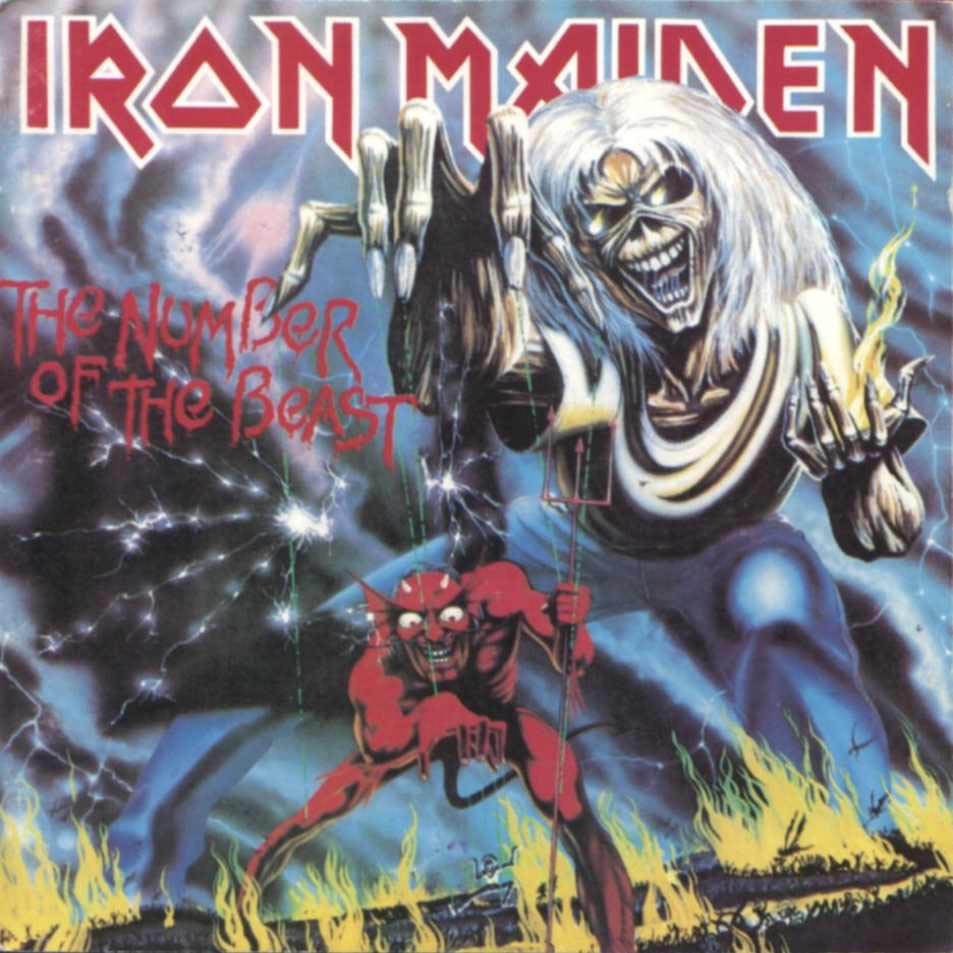
3. Despite what the religious-right in the US want us to believe, one of the biggest influences that led to my conversion was pop music. I was very much into heavy metal music as a kid. Black Sabbath, Ozzy Osbourne, Iron Maiden, and the like were always in my Walkman in the early 1980s. The clever marketing behind these bands was rooted in what Sharon Osbourne called 'horror-rock'. Satan, demons, witchcraft and black magic were touted as both real and somehow infused in the music. Of course I no longer believe there was ever any sinister Satanic plot to undermine young people through music, rather I think the image portrayed struck a rebellious chord with teens and sold records. And as a teen, I had no trouble believing Ozzy Osbourne worshipped a very real, literal devil. Because I believed it to a degree, the music scared me, which was part of its appeal I suppose. Nevertheless, a lot of the imagery used in the music and marketing was drawn from a Christian world view. A world view I held to be true.


4. Perhaps more influential, were the movies I saw. Horror films like The Exorcist, said to have been based on a true story, filled me with such a fear of being demon-possessed at ten years old that I refused to sleep in my own bed for months. The Omen, which I was told was based on Biblical predictions about the coming anti-Christ, also terrified me. Only the true followers of Christ could resist Damian's control, Regan flailed at the name of Jesus and the heroes in these movies were either priests or used Christianity is some way to defeat the devil. Though the Christian imagery has been toned down in more recent incarnations, the vampire films of my youth showed holy water, churches and crucifixes were among the weapons of choice when fighting the undead. Hollywood taught me that the only defence against the devil was Jesus or Christian icons.


The philosopher Charles Sanders Pierce called this way of knowing something, knowing by tenacity. These basic assumptions are are often untested and seen as 'ordinary' or 'usual'. These can be fairly innocuous beliefs like, 'swimming less than one half hour after eating gives you a cramp' or 'carrots are good for your eyesight.' They can also be more serious life effecting beliefs such as superstition and racism. The thing about these kinds of beliefs is that once they are accepted, they are accepted tenaciously. People who hold these tenacious beliefs can be shown evidence contrary to their belief but the evidence is then either ignored or all too easily dismissed. The odd thing is that knowing by tenacity is perhaps the least reliable method of knowing something, and yet it is the most difficult form of knowing to challenge in people. People simply won't, or don't want to, abandon these kinds of beliefs.

Once I began to take a critical approach toward Christianity, I realised how much of my faith was based on these tenacious assumptions. The very existence of God, Heaven and Hell, Jesus, Satan and even the Bible were all bred into me and then fed by the world I lived in and the culture I was immersed in. When the Christian evangelists eventually crossed my path and told me I could have the Holy Spirit live inside me, I was thrilled. Not only was I free from my long carried fear of demon-possession or Satanic control, but now I was one of the good guys. I never stopped for a second to weigh up the truthfulness of their claims. Besides being only 13 years old I was already primed, "white unto harvest." I had NEVER tested the assumptions that my conversion and later faith was based upon.

I wonder how different my story would have been had I been born in China, India or Saudi Arabia...

Sunday, 21 January 2007

The Road I Could Have Travelled.

I don't know why i am doing this to myself, but I have been trawling (not trolling) another blog written by a guy who was a very dear friend back in my Xian days. The interesting thing about reading his blog is to see a possible path I could have taken. We were very similar and on very similar paths at one stage. We were both Pentecostals with stars in our eyes. By that I mean we were both 'on the road to ministry' and both held not so well hidden secret ambitions to be 'big name preachers'.

I don't say this to patronise him as I am not saying this was necessarily a good thing, but I was always one step ahead of him in waking up to the bullshit of the last Xian fad and hitching my wagon to the next one. Maybe it was because I was a little older or maybe it was because I was existing in the Mecca of our AOG culture while he was usually holding jobs and stuff. Either way, it seemed that he would come to similar conclusions to me and we would eventually be able to talk together and rip the shit out of the Pentecostal illusion around us.

And then one day, my marriage broke down and so did our friendship.

It seemed that he couldn't deal with the fact that I had walked out on my (then) wife. In our church circles, marriage was a sacrament, although we would never have used that word. Quite simply, divorce was never an option, ever! One simply did not divorce. As a matter of fact, I don't know if I even knew anyone who had divorced and remained in the Pentecostal scene. I guess most people knew instinctively that to divorce means you really must leave the AOG, even though this is not a written rule of course. I had left the AOG years before I separated from my ex-wife, but my friend was still in the AOG.

He has long since left the AOG of course and is working for Christian charity, runs his own faith community (i.e. house church) and has his wagon hitched to the postmodern emerging church fad. In fact, one of his mentors now was my mentor back in the day. (That was my last stop before taking the plunge and leaving church and eventually the faith.) Anyway, to his benefit, I am sure he could well handle my divorce were it to happen now.

But reading his blog, getting a feel for where he's at now, I cannot help but see what might have been for me had things gone differently. He is teaching part-time at a local Bible College, working for a charity, speaking at conferences, etc...doing all the things that I would have given my right arm to do at one stage in my life. He has 'arrived' although I am sure he wouldn't see it that way. He is still reading all the latest books, quoting the latest postmodern Xian dude, hanging around the right 'mentors', taking a devotional slant on the things going on around him. As I read his blog I felt a twinge of...I dunno how to define it. I guess this stuff was such a part of my identity for so long, to see someone living it, doing it, stirred old emotions in me.

Does this mean I am jealous for his life? No, of course not. But I sometimes think it must be nice to still believe it all. You know, like that guy in The Matrix who wants to go back into the illusion to escape the hardships of reality? I have said it before and I will say it again, I miss the sense of purpose, the sense of meaning that being a religious zealot gave me. I know it was a false sense of meaning, but it seemed oh so real to me then. But I could never go back even if I wanted to. I simply don't believe it anymore.

I see a lot of what my old friend does as misspent energy (not the charity work of course). All that he does is hinged on a faith in a first century Jew and his band of merry men. For sure, this isn't the only motivation for all he does, but without the Jesus myth his whole world, all he has built and lived for, would come crashing down...as mine did. You know, having gone through it, I wouldn't wish that kind of pain on anyone.

I know my friend would say that he took the better road and I obviously think I did. Our lives are very different now, so perhaps we weren't so similar after all.

Friday, 19 January 2007

My Journey

My backstory as a Christian is probably not too unique or interesting. Although when I was 'walking away' I felt very isolated and thought I was the only one who had ever gone through it. I later found out how wrong that was.

I was from a non-religious family and 'got saved' in 1984 at 13 years old when a travelling group of musicians came through my school and kicked up some religious fervour. I was later recruited into an Australian Pentecostal cult known as the Revival Centres International. They are somewhat similar in belief to the United Pentecostal Church. At 17 I left that group, rather I was kicked out for a time for having premarital sex once (yes, once), but I took it as a chance to leave and so never went back.

After a few years of avoiding religion and getting right into the thriving nightlife of my city, my religious guilt and fear of Hell and the devil caught up with me and I eventually joined the more mainstream Assemblies of God in Australia (AOG) at 20 years old. I was a member of one of the AOG's flagship churches, Richmond AOG. My more mainstream Evangelical church going experience began here.

As I had so many questions regarding my past beliefs and what was being offered by the the AOG, I started classes at Harvest Bible College (AOG) in 1991. This college was very dogmatic in both its course content and delivery. It was not the place for questioning anything. In my church I was a very active member of the youth group, Bible study, street evangelism, welfare outreach and I even sang on stage from time to time.

I started the road to ministry at college and eventually got a position as a youth pastor in the Geelong AOG and applied for ministerial credential (a years long process). That is a post in itself, but let's just say for now that I saw the dirty side of ministry and the AOG institution. I was quite disillusioned so I resigned my position but returned to Richmond AOG.

I eventually married a pastor's daughter, continued with Bible College and started to research the history and beliefs of the Revival Centre cult on my own. As I did this I was able to see not just the history of the cult but the larger history of Pentecostalism in Australia and the world. I guess I believed I would be able to trace this history back to some kind of more pure form of Christianity. However, as I continued my research, I saw that Pentecostalism's history was littered with scandals, wacky beliefs and strange practices. This hardly reflected the AOG party line about the move of God and revival that had supposedly spawned their movement. My disillusionment grew, the 'Pentecostal distinctives' seemed less and less in line with what I felt the Bible taught, and so I retracted my application for ministerial credential and left the AOG.


After a brief stint of pew warming at a Baptist church, I hooked up with the Churches of Christ in Victoria, applied for ministry credential and began a church planting project in the suburbs of Melbourne with my good friend who is now a missionary to northern Asia. This didn't go as well as I had hoped and so we shut down after about a year and incorporated our group into the urban mission focused South Melbourne Church of Christ (now apparently known as Red). It was here that my faith began to be challenged. This church was more progressive than most Evangelical churches and many people there were fed up with Evangelicalism but not ready to step out into Liberalism or leave the church entirely. This church was one of the international epicentres of what has become known as The Emerging Church Movement. We were, to the pastoral team's benefit, free to explore ourselves and the ins and outs of our faith. Well, to a point anyway.

I had continued my exploration of Church history, having delved back beyond Pentecostalism and into The Great Awakening, The Reformation, etc. Though I couldn't have put it into words at the time, I was searching for some point in history where I could say, "Here it is. Here is a pure form of the faith I can emulate." By this point I had friends who were Methodist, Anglican, Lutheran and other more traditional forms of Christianity, who were on a similar journey and trying to find and live what one of them had called 'Classical Christianity'.

Now most importantly, this whole time, I was still exploring aspects of cults and why seemingly intelligent people do the most horrific or even stupid things in the name of religion or at the whim of the cult leader(s). I was also very interested in why people joined and stayed in pseudo-Christian groups like the Mormons and The Jehovah's Witnesses. I began to study these groups in depth, meet with their missionaries, visit their services and even tried my hand at de-converting members. I spent a lot of money on books, tapes and videos, not all of which were hostile to the groups. I figured the best way to know them was through primary source material. In other words, their own publications. As I came to understand what these groups believed and the worldview they had to adopt in order to remain as believers, I began to see the striking similarities between 'them' and 'us'. I recall consciously making the decision not to think about this too much as it made me more than uncomfortable. Eventually, I was forced to be more honest with myself than this as the cognitive dissonance began to take its toll.

I enrolled in a post graduate Religion and Theology degree at Monash University with the intent of bettering myself for ministry. It was a secular course but I chose only courses that had a Christian emphasis. After reading the course outlines, my wife commented that I was probably going to lose my faith if I did these subjects. My then mentor, Alan Hirsch, also suggested I not do the course seeing as I was having trouble finding any relevance in my church experience. His concern for me was genuine but I didn't buy the logic. Surely the truth was not that 'fragile'. Surely the Holy Spirit within me was not so easily spooked.

I was exposed to lecturers who held a more liberal view of Christianity. Some still attended church, others had long since given it up. All impacted me with what they had to say. My Hermeneutics subject did not parrot the dogmatic Evangelical 'rules' of Hermeneutics but rather looked back through history at different ways key figures in church history had interpreted the Bible. We also looked at postmodernism and its philosophical objections to inerrancy. For assessment in that subject, I wrote a paper that 'debunked' the AOG in Australia's statement of faith concerning inerrancy. That was it for me. I no longer held a fundamentalist theology of the Bible. In 1999, four years of Bible college indoctrination came crashing down after just one semester at a secular university.

I didn't totally abandon the faith for another six years after that. I tried to flirt with Liberal Christianity for a while by reading Marcus Borg, John Spong and briefly attended a Liberal Catholic parish. Nothing seemed to gel with me. It all seemed so hollow, so empty, so meaningless. I eventually started a brief dialogue with Robert M. Price who really helped me with some of my less rational fears about 'walking away'. Bob said something like, "If God really existed then he wouldn't be fooled. If you don't believe then you don't believe. Admit it and get on with your life." So, in 2005, I came to a place where I was finally able to say I did not believe anymore. I was also able to say that I had, in fact, not believed for years and had been kidding myself. Like I said earlier, the cognitive dissonance was a bitch.

I am now a teacher and have remarried. I know this is going to sound trite, but I am truly the happiest I have ever been since my teens. I have reestablished meaningful relationships with my non-Christian family, assigned meaning to the everyday and began to live life in the here and now and not for some 'pie in the sky when you die'.