I've been thinking a lot about my conversion process lately and how it all fell together and brought me to a Christian faith. It is funny how we interpret and reinterpret things in light of who and where we are at the time of reflection. History is never objective but always interpreted in light of the historian's world view.
My parents were not practising Christians beyond having my brothers and myself baptised or 'christened' as infants in the Anglican Church. As an Evangelical I would share my testimony with people and always say that, "I was not raised in a Christian home..." On later reflection though I realised that my upbringing, geographical and social contexts did play a large part in my conversion.
 1. I knew from a young age that our family's religion was Christian, Church of England (or Anglican) to be exact. When as a child your parents tell you things, you believe them. So I was already in a place of (at least conditional) acceptance of the Christian religion. While my parents never gave us dogmatic religious training, we were taught that Jesus was God's son, he died on a cross, rose again and the Bible was God's book. We all had our own children's Bibles and were taught the story of Adam and Eve at a young age. We never heard concepts or words like inerrancy, Trinity, incarnation or atonement. As I said, we were only nominally Christian, but we knew the stories...at least the major ones.
 2. As an Australian I was told that I was part of a Christian nation. Now back in the 70s and 80s, Australians didn't use the term 'Christian nation' in quite the same way as Americans do now. It wasn't such a politically laden term. It was simply another identity marker we used. You didn't need to be a Christian to be considered truly Australian or patriotic. Nevertheless, this fed my identity as a young person.
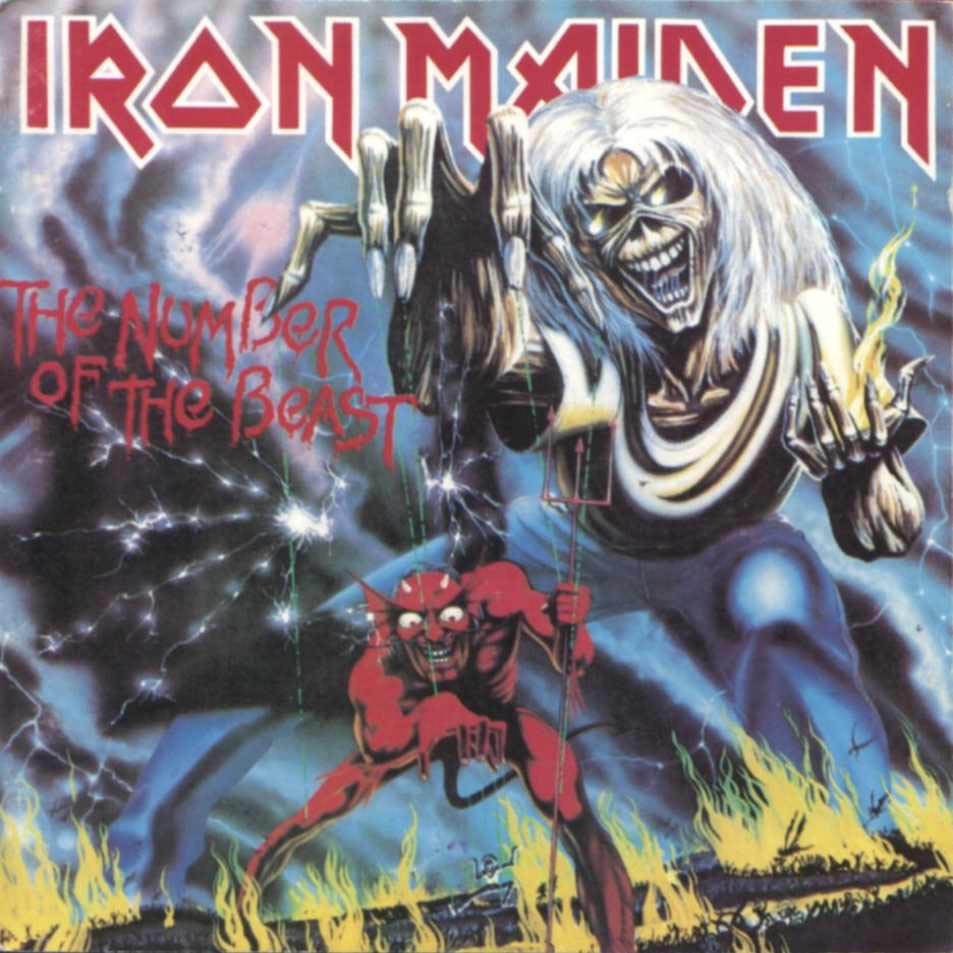
 3. Despite what the religious-right in the US want us to believe, one of the biggest influences that led to my conversion was pop music. I was very much into heavy metal music as a kid. Black Sabbath, Ozzy Osbourne, Iron Maiden, and the like were always in my Walkman in the early 1980s. The clever marketing behind these bands was rooted in what Sharon Osbourne called 'horror-rock'. Satan, demons, witchcraft and black magic were touted as both real and somehow infused in the music. Of course I no longer believe there was ever any sinister Satanic plot to undermine young people through music, rather I think the image portrayed struck a rebellious chord with teens and sold records. And as a teen, I had no trouble believing Ozzy Osbourne worshipped a very real, literal devil. Because I believed it to a degree, the music scared me, which was part of its appeal I suppose. Nevertheless, a lot of the imagery used in the music and marketing was drawn from a Christian world view. A world view I held to be true.
 4. Perhaps more influential, were the movies I saw. Horror films like The Exorcist, said to have been based on a true story, filled me with such a fear of being demon-possessed at ten years old that I refused to sleep in my own bed for months. The Omen, which I was told was based on Biblical predictions about the coming anti-Christ, also terrified me. Only the true followers of Christ could resist Damian's control, Regan flailed at the name of Jesus and the heroes in these movies were either priests or used Christianity is some way to defeat the devil. Though the Christian imagery has been toned down in more recent incarnations, the vampire films of my youth showed holy water, churches and crucifixes were among the weapons of choice when fighting the undead. Hollywood taught me that the only defence against the devil was Jesus or Christian icons.
 The philosopher Charles Sanders Pierce called this way of knowing something, knowing by tenacity. These basic assumptions are are often untested and seen as 'ordinary' or 'usual'. These can be fairly innocuous beliefs like, 'swimming less than one half hour after eating gives you a cramp' or 'carrots are good for your eyesight.' They can also be more serious life effecting beliefs such as superstition and racism. The thing about these kinds of beliefs is that once they are accepted, they are accepted tenaciously. People who hold these tenacious beliefs can be shown evidence contrary to their belief but the evidence is then either ignored or all too easily dismissed. The odd thing is that knowing by tenacity is perhaps the least reliable method of knowing something, and yet it is the most difficult form of knowing to challenge in people. People simply won't, or don't want to, abandon these kinds of beliefs.
Once I began to take a critical approach toward Christianity, I realised how much of my faith was based on these tenacious assumptions. The very existence of God, Heaven and Hell, Jesus, Satan and even the Bible were all bred into me and then fed by the world I lived in and the culture I was immersed in. When the Christian evangelists eventually crossed my path and told me I could have the Holy Spirit live inside me, I was thrilled. Not only was I free from my long carried fear of demon-possession or Satanic control, but now I was one of the good guys. I never stopped for a second to weigh up the truthfulness of their claims. Besides being only 13 years old I was already primed, "white unto harvest." I had NEVER tested the assumptions that my conversion and later faith was based upon.
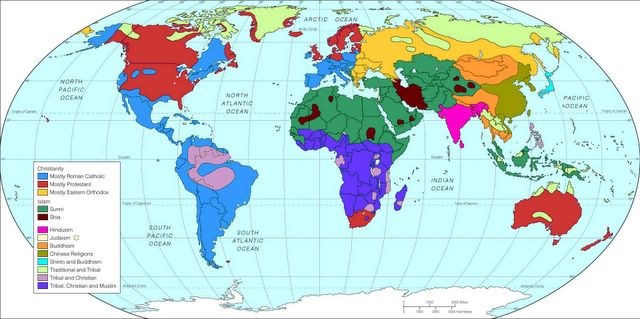
I wonder how different my story would have been had I been born in China, India or Saudi Arabia...